
Baccarat can seem intimidating because its betting options look elaborate, yet the underlying game is surprisingly simple. If you want to learn baccarat here, focus first on how each round is decided, not on every side bet at once. The essential baccarat rules for beginners revolve around three outcomes, a small number of player decisions, and card values that are easier to grasp than many casino games. The key is understanding the table before risking money.
The Basic Structure of a Baccarat Round
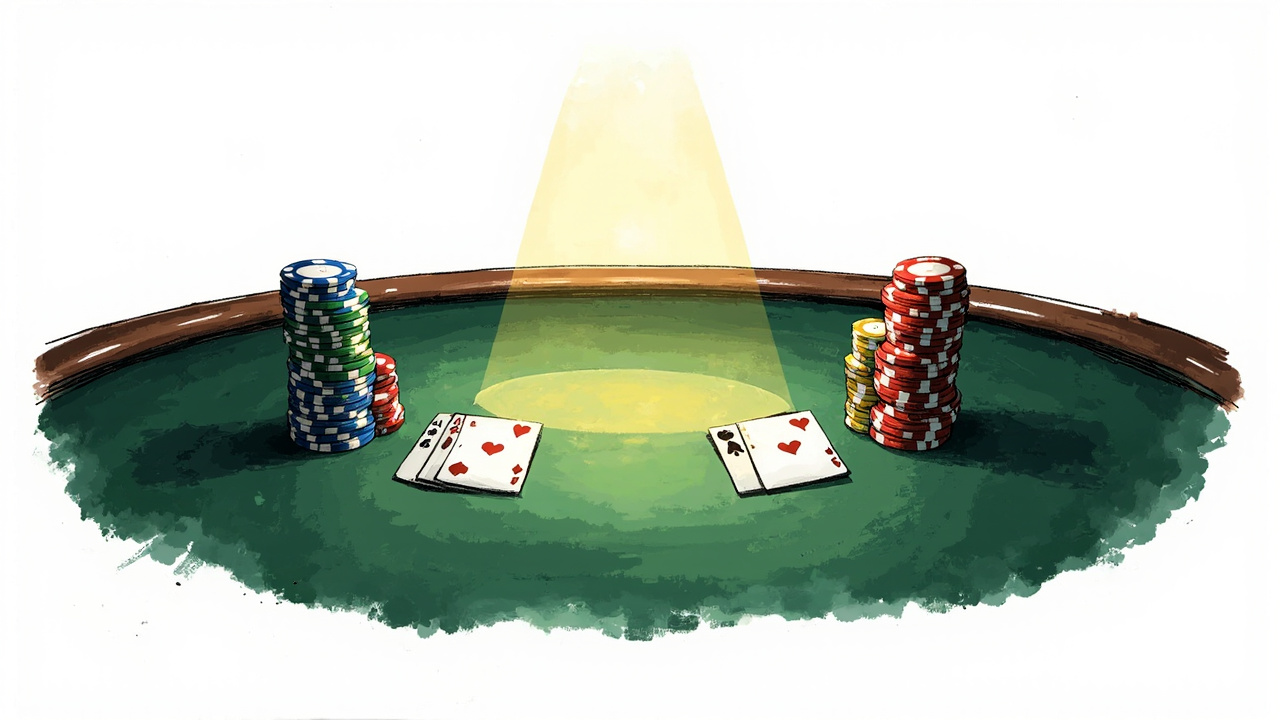
A baccarat hand uses six or eight standard playing cards, depending on the casino’s rules. The dealer deals two cards each to the Player and Banker, then draws additional cards under fixed conditions. The goal is to produce a total closest to nine. Only the first digit of a two-card total counts, so 15 becomes 5, while 10 becomes 0.
There are three possible results: Player wins, Banker wins, or it is a Tie. You may bet on any of them, though Banker and Player wagers pay differently because the Banker position carries a statistical built-in advantage. A winning Player bet typically pays 1:1, while a winning Banker bet usually pays less because of a commission. A Tie generally returns your stake but does not pay a profit.
This is where beginner baccarat rules become more practical. You are not deciding how to hit, stand, or exchange cards. Those choices belong to the table rules. Your decisions mainly involve choosing a betting area, checking the limits, and deciding how much to wager.
| Key parameter | Typical beginner rule |
|---|---|
| Objective | Have the hand total closest to 9 |
| Main bets | Player, Banker, or Tie |
| Number of cards used | Six or eight per shoe |
| Player decision | Place a bet; card drawing follows fixed rules |
| Card values | Ace = 1, 2-9 = face value, 10/J/Q/K = 0 |
How Baccarat Rules Work Under the Hood
The mechanics are straightforward, but the details determine whether a round feels intuitive. There is no blackjack-style option to draw another card, and no craps-style dice decision. Once the bets are placed, the dealer follows the prescribed drawing sequence.
The Dealer’s Fixed Drawing Sequence
With four cards already dealt, the Player and Banker totals determine whether an extra card is drawn. If the Player has 8 or 9, no more cards are drawn and the Banker does not draw. Otherwise, the drawing rules depend on the Banker’s total.
If the Banker has 6, 7, 8, or 9, the Banker stands. If the Banker has 5, 7, or 8, the Banker draws under most four-card arrangements. With a Banker total of 6, the Banker draws if the Player’s third card is 2-6; with a total of 5, the Banker draws if the Player’s third card is 1-6. A Player third card of 7-9 causes the Banker to stand.
If the Player has 0-5, a third card is usually drawn. A Player total of 6-7 stands. A Player total of 8-9 stands, and in both cases the Banker may draw if its own total requires it. These rules vary slightly between six-card and eight-card games, so check the table display before playing.
The important lesson is that you do not need to memorize every drawing combination to place a basic bet. However, understanding the sequence explains why totals of 8 and 9 are powerful and why cards are never valued above 9.
Betting Options and Their Real Costs
A Player wager wins when the Player hand is higher. A Banker wager wins when the Banker hand is higher. A Tie wager wins only when both hands have the same total, which makes it less frequent and more volatile. That is the central difference between a main bet and a side bet: the outcome may look attractive, but the probability and payout both matter.
Beginners often focus on the displayed payout and ignore what happened before. Ties do not end the game; they usually cause the dealer to deal another round, and the current wager remains resolved according to the Tie rules. The shoe continues with a new hand, subject to the casino’s handling of ties and card penetration.

A useful comparison is with dice-based games. For a wider explanation of another casino classic, beginner craps rules can help show how fixed house rules differ. In baccarat, the dealer’s actions are automatic, so your primary task is controlling bet size and avoiding confusing entertainment wagers with the main decision.
Why the Banker Bet Is Not Automatically the Best Choice
The Banker bet usually carries a small commission because it wins slightly more often than the Player bet. That does not make it a guaranteed long-term profit. Variance can produce losing sessions, and the commission reduces returns compared with a 1:1 payout.
The Tie bet is different again. Its payout can look generous because it pays more for a rarer result, but ties are uncommon and can erase several ordinary wins over time. Side bets such as Player Pair, Banker Pair, Perfect Pair, or Either Pair introduce separate rules and payout structures. They are not part of the basic baccarat rules for beginners and should be treated as optional entertainment rather than a simpler introduction to the game.
Choosing a Table for Your Experience Level
A beginner table may be more comfortable than a high-limit room, but limits alone do not determine whether a game is suitable. The first question is whether you understand the main three betting areas. If you cannot identify Player, Banker, and Tie, move to a lower-stakes table and observe before wagering. The aim is to learn the rhythm of the hand, not to prove that a particular system works.
Second, check the commission and payout information. Some tables offer no-commission Banker bets but compensate through other rules, such as charging a different amount on certain Banker wins. Read the actual table rules rather than assuming the headline wording is equivalent to a standard commission game.
Third, decide whether Tie and side bets belong in your session. A cautious first approach is to use Player or Banker bets, make modest wagers, and record the results for a short period. This can reveal whether you understand the table before increasing your stakes.
Also consider the pace. Live baccarat can run quickly, especially when many hands are dealt, while online versions may include timers or optional side features. A comfortable pace matters more than any alleged “winning seat.” In baccarat, there is no strategy that changes the cards already in your hand. Your best practical controls are a defined bankroll, consistent stake sizes, and the willingness to stop.
A Safe First Session
Start with one table and one main bet. Watch several rounds before placing money, identify the total shown for each hand, and confirm what happens after a Tie. If the rules or commission are unclear, ask the dealer. That is not a sign of inexperience; it prevents a misunderstanding from turning into an avoidable cost.
Keep individual wagers small relative to your session bankroll. A common beginner mistake is doubling after a loss because the next hand feels “due.” Each baccarat round is independent, so previous losses do not make a win more likely. Likewise, a long winning run does not increase the chance of continuing it.
For additional background, practice with a free or low-stakes version where available. This lets you learn the card totals and betting sequence without confusing real-money results with rule practice. If you also play dice games, compare the structure through craps basics, but keep the games’ separate risk profiles in mind.
Baccarat rules for beginners become manageable once you separate the game from its presentation: cards determine totals, the dealer follows fixed drawing rules, and your choices are mostly about which outcome to support and how much to stake. Learn the three main bets first, understand the Banker commission and Tie treatment, and avoid side bets until the core round no longer feels confusing. The game should remain entertainment within a budget you can afford to lose, not a source of predictable income.